Friday, September 14, 2012

Time is Money

By: Alon Cohen EVP/CTO at Phone.com

How do you move from a few friends brainstorming on a new startup concept to actually getting the group to sit down and start working to build a company?


How do you deal with situations in which one team member already has a job and cannot devote the hours to the project that other founders can put in? What if you start and one team member gets an offer he cannot refuse from say Google? What if one member is a good salesperson or marketing person, and will only contribute later after the R&D phase? In other words, how do you divide the cake, to begin with?


Resolving all that from the get-go is essential, but is usually awkward for first-time entrepreneurs. Many times a no solution prevents good things from happening or good ideas from coming to fruition. Venture capitalists often say that they mostly invest in a management team.  Accordingly, a group of founders that have these issues resolved will be more attractive to investors.


To start, one must look at least on three periods: the periods before funding, during funding, and after funding, i.e., when an investor decides not to invest anymore, for some reason, and the founder is left stranded with the rent and salaries to pay.


Say you, the entrepreneur, have an angel investor or start working with an incubator for a defined period. The incubator or the investor stops investing, while you are willing to continue to work on the project on your own time until funding or revenue comes along. Will the incubator get to keep all the equity they initially received? How would you be compensated for the work you did during the post-incubator or post-funding period?


Existing solutions do not favor the entrepreneur, and usually, the only situation in which you can recover some equity when things change is if a team member quits. In that case, you might recover some equity only if the company, upon funding, agreed on a “reverse vesting” mechanism. (Generally speaking, I like the reverse vesting mechanism).


I was thinking about the startup bootstrap problem in over the years, and again recently, particularly in my role as a mentor with the TechLaunch program in NJ and ffVC in NY. It seems that there is a need for a simple method that can help individuals to resolve some of those common problems that emerge when you start a company.


The concept I came up with is based on the fundamental axiom (sometimes forgotten by some investors after the funding is done) that “Time is Money,” and, in our case, time and talent are money.  The concept is as follows:


You define (agree on) the value of each hour of work invested by a team member, like say, a discounted, $50/hour.


When the group starts the project, usually working with no salaries, each participant logs the time invested, like money, based on the agreed-upon conversion rate. If a member needs to put some money into the company for anything, you will log that as dollars.


For instance, if one person invested 100 Hours + $10,000 (that is 100*$50 + $10,000, or $15,000) and say the other partner invested only $15,000 (with no work), the two investments are deemed equal (theoretically, with no official share distribution yet). When another person joins, he or she starts accumulating their own share in the same way. If the investment goes to pay anyone a salary, then no hours will be logged for that paid individual.


Now, say that the bunch created an application that sells nicely on the App Store. Any revenue left to distribute will be split based on the percentage “invested” by the partners. This process nicely solves the situation where one person leaves the project for some reason. The others, which continue, gain a larger share since the relative share of those who left diminishes over time unless they continue to contribute.


As you move to the funding phase, the key is to get investors or an incubator to agree to accept that principal and keep that process going when, or in case, they stop investing. Say the founders decide to keep working with no pay after the funding ended, or until the next round is secured—the contributing founders keep counting hours, which will be regarded as if they invested more money as part of the last round.


Clearly, after an investment, the rate of gaining back equity by the founders might not be the same as the rate at the beginning stage, (since the company now has a post-money valuation) but that might serve the investors well, since, in spite the fact that they might lose some relative equity at some rate, they will still be in the game for an upside in the event the startup makes it. It is also acceptable that each working individual’s investment rate will now be defined based on the salary they received during the time the company was funded. Without that founder’s compensation, most startups will disintegrate when the funding ends.


Angel investors and incubators might be smart to accept these terms. Those terms provide the founders with an incentive to keep working on the project, and can also prevent unwanted friction as you move forward.


I asked myself if those investing hard-earned money should have some sort of preferred compensation in case of distribution of revenue. Eventually, I concluded that time plus talent should be treated just the same as money. In much the same way that the investor risks wealth (and, in most cases, not even his own), the founder risks his or her future and misses on potential earnings. Hence, in my eyes, the two parties bear a similar risk.


While talking to David Teten, a partner at ffVC, he recalled that he successfully used a similar model at his prior startup, Navon Partners.  There, he calculated the vesting on a daily basis instead of an hourly basis. As he put it, “it’s sometimes annoying to track activity by the hour.”


There may also be tax ramifications to a founder who earns equity through providing services.  I urge you to consult with your accountant or attorney to be sure you avoid any tax landmines.


What do you think of this structure?  Have you used a system like this yourself?  What challenges have you encountered?


Editor note: the views & opinions expressed herein are those of the contributor and do not necessarily reflect the opinions & views of ff Venture Capital.


Monday, March 12, 2012

Can the FCC help us gain less weight?


By: Alon Cohen

According to a survey done during 2007, children ages 2-17 are exposed between 12 and 21 times per day or  about 4400 times to 7600 times per year to food advertising. On the other side, they are exposed to only 47 to 164 times per year to fitness or nutrition service ads.


According to the Centers for Disease Control and Prevention, the prevalence of obesity has more than doubled among children ages 2 to 5 (5.0% to 12.4%) and ages 6 to 11 (6.5% to 17.0%). In teens ages 12 to 19, prevalence rates have tripled (5.0% to 17.6%). Obesity in childhood places children and youth at risk.


Today’s children, ages 8 to 18, consume multiple types of media (often simultaneously) and spend more time (44.5 hours per week) in front of computer, television, and game screens than any other activity in their lives except sleeping. Research has found strong associations between increases in advertising for non-nutritious foods and rates of childhood obesity.


So what do I propose…

The FCC mandated a rule that say that all television sets with screens 33 inch and up must be equipped with a feature to block the display of television programming based on its rating.
This technology is called the V-chip. and it enables you to block certain programming types.


A simple solution might be to mandate the rating of ads as well, and use the V-CHIP technology already in TV sets to enable parents to block certain types of ads for the sake of the kids, and judging from myself for my own sake as well.


And here the kicker, fast thinking cable companies (or Google) can take advantage of that newly created dead ad time and use that as inventory to sell other types of ads stored on the cable box, targeting them based on specific consumer preferences. Presumably, this targeting process can be used as a completely new method of targeting consumers for all TV ads, by enabling people to opt out from ads they do not like or need.


A win, win, win, win. Kids, parents and the whole nation win by eating less and promoting health. Consumers win by getting to choose ads (or opt them out), advertisers win by showing correct ads to those who are interested hence increasing conversion rates. Cable companies win by creating a new, better-targeted advertising model. Who losses? You tell me.


Thanks
Alon

Wednesday, November 16, 2011

AI, Are We There Yet?


By: Alon Cohen

Wow how times fly. I remember a discussion I had about 28 years ago as if it was yesterday. At the time, I was working on few computer programs that seem to need human intelligence. One was an automated device testing program that could tell a technician which board to replace based on anomalies in the way that device behaved. The second was a learning algorithm that had to play Tic-Tac- Toe by figuring out the rules of the game by itself (yes after I saw the movie war games in 1983)) and it triggered in me the thinking about what would it take to make a computer more human.
I was talking to few of my friends discussing what would it take to make a computer creative. My idea at that time was that scientists would probably be able to take a human Neuron (or few of them) and place them in a chip, and use that as an intuition co-processor.
Well it seems like the MIT scientists just made it happen. The MIT people did not really took a brain tissue but found a way to emulate the way a Neuron behaves using analog circuits on a CMOS chip. I guess it took more than few years to figure that one out. However, as it stands I can now envision a reality just as the one depicted in Asimov’s books where business entities (like US robotics) will own an artificial brain that will surpass any human or supper (digital) computer in existence, which will help them invent and solve problems not solvable by humans like time travel or teleportation.
As it stands, the human brain has 100,000,000,000 Neurons and about 100,000,000,000,000 Synapse connecting them. The cerebral cortex is the outermost part of the brain. It plays a key role in memory, attention, perceptual awareness, thought, language, and consciousness. The number of neurons in the cortex is estimated to be 11,000,000,000 so about 11,000,000,000,000 Synapses. Synapses are those specialized junctions through which neurons signal to each other.

Surprisingly it only took 400 transistors to create that artificial Synapse at MIT. Imagine a quad core Itanium chip with 2,000,000,000 transistors, take that level of technology and you can create a brain with 5,000,000 Synapses or an equivalent of 5,000 neurons give or take or hmm as smart as Pond Snail.
Since our brain has about 11,000,000,000,000 Synapse in our cortex, we need just about 2.2 Million more of those quad core chips to emulate the human cortex. Sounds scary large number but the truth is that it is not that far if you are an optimist.
If you apply Moore’s law to those numbers you get that in 30-40 years (2^21 = 2M) give or take we will have the capacity to replicate a human cortex that can work thousands of times faster than a human can.
It is not that far I can tell you that, specifically when we live in internet speeds and each New Year end before you even noticed it started. Now, way before those 30 years, say 15 years from now we will be able to compose an artificial brain equivalent in capacity to a dog cortex. I guess all we will need to do at that stage is hope that this technology will not bite us. If it will bite, it will help us realize the corrections we need to make, just in time, so that the first artificial human-level brains will do the right thing.

Tuesday, August 30, 2011

Science Fiction? Conspiracy theory? – You Decide

Science Fiction? Conspiracy theory? – You Decide
By: Alon Cohen

I will start and explain why I do not buy HP products for 10 years now. This is a story I have been telling every HP employee I have met at every trade show and every friend who asked me about HP that was willing to listen.
Maybe 10 years ago I bought an all in one HP printer. I really liked HP from my days working at an R&D lab during the eighties, where every really good measurement equipment was either Tektronics or HP. I specifically liked the HP200 serious of PC computers that were way ahead of their time and superior in all aspect (but the cost) to the flimsy PCs XT that came out from IBM and looked like crap back in 1986-1987. So naturally, when I came to staples around 2000 and saw the brand new HP printers I still carried with me that warm fuzzy feeling I had from the old HP days about those products.
Since I needed two printers, one for home and one the office, I thought to myself why not buy the same one? This way I will install the driver once on my laptop and be done with it. In theory a great idea, practically I discovered that HP is not HP anymore and that printer drivers, is not their forte to say the least. But you know what, this is not the point.
The point is that after a year, just a week or two after the warranty expired, both printers started to display a similar error message on the screen. Normally a person who buys one would not suspect a foul play, however when one printer did thousands of pages at the office and the other one did only few pages sitting idle at home, one starts to suspect. My suspicion was that HP allegedly inserted a time bomb in the printer software to make it looks like it is dead forcing consumers to buy new printers.

To be honest, I have no proof of that but I was unable to shake that feeling off over the years, specifically with all the other bad smell coming out of that company.

It did not end there, to add a sin to the crime, when I called HP's customer support they made me pay for the call and forced me to buy another cartridge saying the new spare one I had expired. Well clearly, it did not, but if you can squeeze few more bucks from a sucker why not.

At some point, the HP customer support agent felt he was on a roll, one sucker customer two bad printers, so he took it to the next step saying: “What if I will get you the newest fancy printer for only $200”. Well I was an idiot for buying the first time but hey I am not that bad. And so I said, “let me get back to you on that”.

The next day, I went to the store to compare prices and, lo and behold, it is cheaper at the store! This sealed the deal from my point of view. I have not touched HP ever again.

Was I correct about this alleged selling methodology? You will be the judge of that. However moving to now, I came across this WSJ article about how HP decided to commit suicide and how this whole move is so unclear to everyone in the industry and... bang, it all became clear to me.

I wouldn't be surprised if few years from now, it will come out, that competitors were able to prove what HP did use time bombs and gave HP’s board and management an ultimatum to stay out of the PC / Home Printers / Tablets space or face class action law suits with deep personal consequences. I am not sure how deep you are into conspiracy theories, but this explanation works for me, and personally, I would like to see them out of the game because of that incident.

Who knows, maybe Agilent who span off, back in the days, and took HP’s good measurement products, can re-take the HP name and revive it to glory once again.

Thanks
Alon

Friday, January 7, 2011

How to stop your Microwave clock from Blinking

By: Alon Cohen

Whenever I hear about a new programming language I cringe. Essentially programming languages are all the same… a group of commands in an allegedly human readable language that tells your computer or device how to respond to inputs like keys keyboard, voice, numbers, mouse and so on.

So why do we have so many programming languages? Well every so often, a computer science professor decides that all that was done so far could be done in a simpler way; for those of you who believe that, I suggest trying to program in “Scheme”. Too often, a software company from the north-west decides that the best way to sell new development tools would be to create a new sharper language. Or a company in California, decides that in order to make it harder for developers to move code from other platforms it is better to come up with their own version of objective C.

Generally speaking, all those "new" languages, in my mind, just slows down development of good code (as programmers are always new to the language) and it prevents the industry from building on existing foundations. Yet it sure does help few companies to strive.

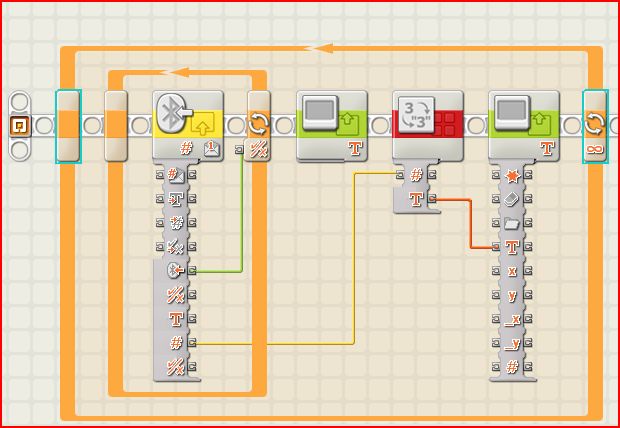
Contrary to the above, sometimes a good idea appears. This time, I would not call it a programming language but more like a programming interface. It is not an entirely new concept and it was even used for programming of Lego Devices and even homegrown interactive telephony systems.

However, this new concept from a Rutgers Professor makes me optimistic and also proud as my two boys, Gal Cohen who directly works on this project as a Junior at Rutgers, and Roy Cohen a Sophomore in High School who helps the team with ongoing advice about the Arduino and Xbee communications.


So why am I optimistic? Well for once, I can see this saving significant amount of my time trying to convince the kids to program the “smart” phones to do X & Y (for instance try activating conditional call forwarding on iPhone). It will also save me time helping less technically oriented friends, to deal with devices from answering machine (yes some people still use those) to wireless printers.


Plus, I can clearly see how the Phone.com user interface for call handling rules (which I use every day) could become a part of that Scratch world, helping customers define, in a simpler way than available today, the different actions that will take place when a call comes in.